
HOW DOG TRAINING WORKS AT CANDID DOG TRAINING
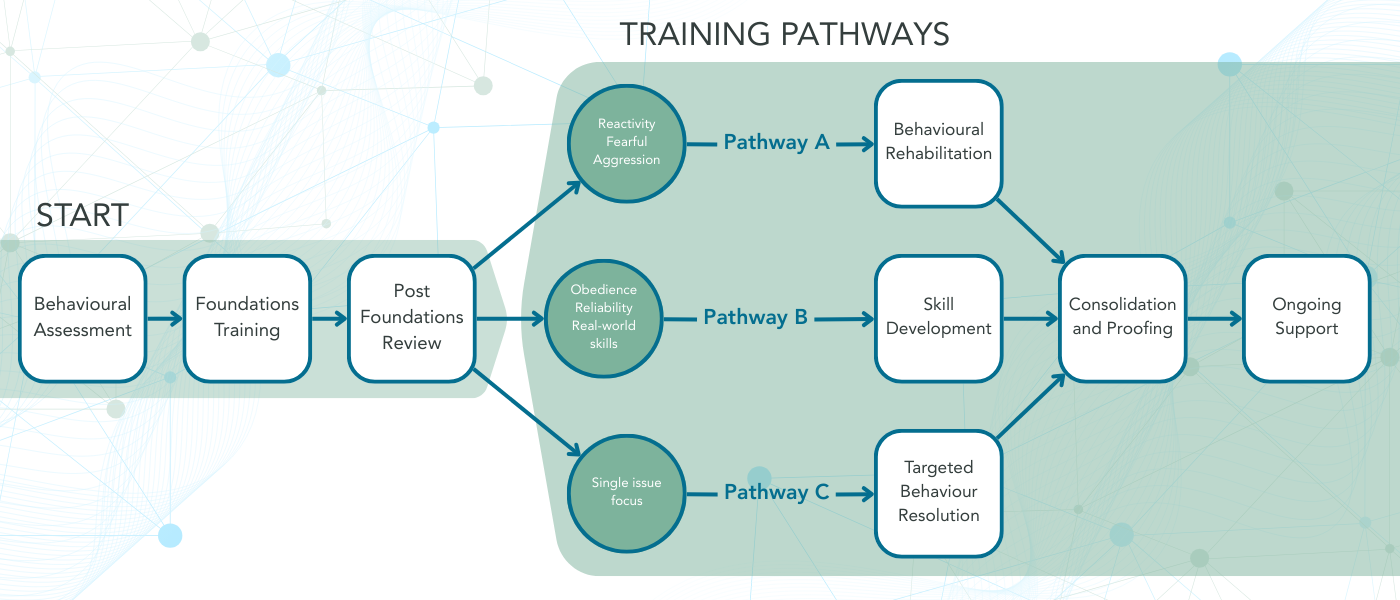
WHY TRAINING STARTS WITH AN ASSESSMENT
Every dog is different. Behaviour, motivation, past experiences, and the way you handle your dog all influence how training should be approached.
The assessment allows us to understand your dog properly before making changes.
During the assessment, we:
Build a clear picture of behaviour and current challenges
Observe motivation and engagement
Look at handling, communication, and leash use
Identify any management or safety considerations
The goal isn’t to judge, it is to gain clarity so training decisions are thoughtful and appropriate.
This sets the direction for the work ahead.
BUILDING THE FOUNDATIONS FOR PROGRESS
Once we understand your dog and your goals, we begin with Training Foundations.
This phase focuses on:
Clear communication
Motivation and engagement
Steady handling
Practical skills that support learning
Foundations isn’t about rushing into advanced work. It’s about building the understanding and skills required for reliable progress.
For many dogs, this stage begins to resolve the original concerns. For others, it creates the stability needed for deeper behaviour work.
MOVING FORWARD BASED ON PROGRESS

After Foundations, the next step depends on how your dog is progressing.
Some dogs continue into focused behaviour modification.
Others move into further skill development or refinement.
In some cases, targeted support is all that’s needed.
There isn’t a preset track. The direction is guided by progress and what will create meaningful change.
HOW TO GET STARTED
Training isn’t built on isolated sessions or quick fixes. It’s built on clarity, consistency, and steady development over time.
If this approach makes sense to you, the first step is an assessment.